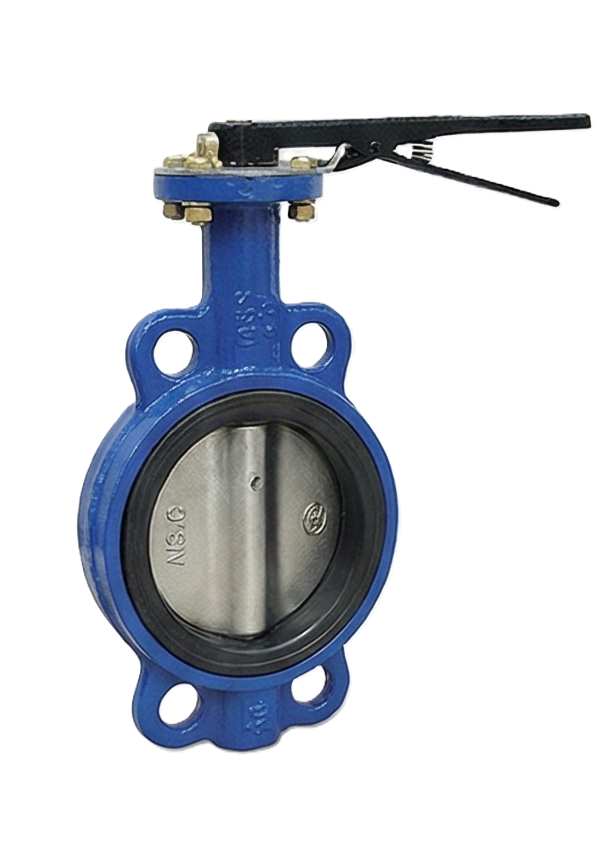
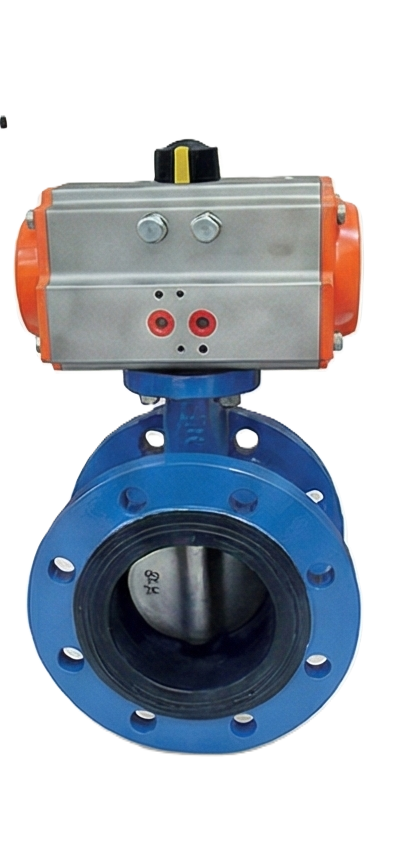
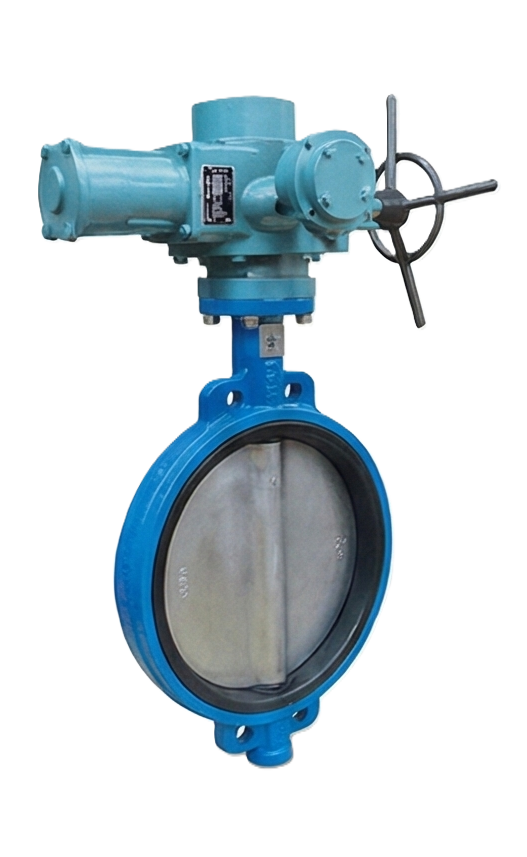
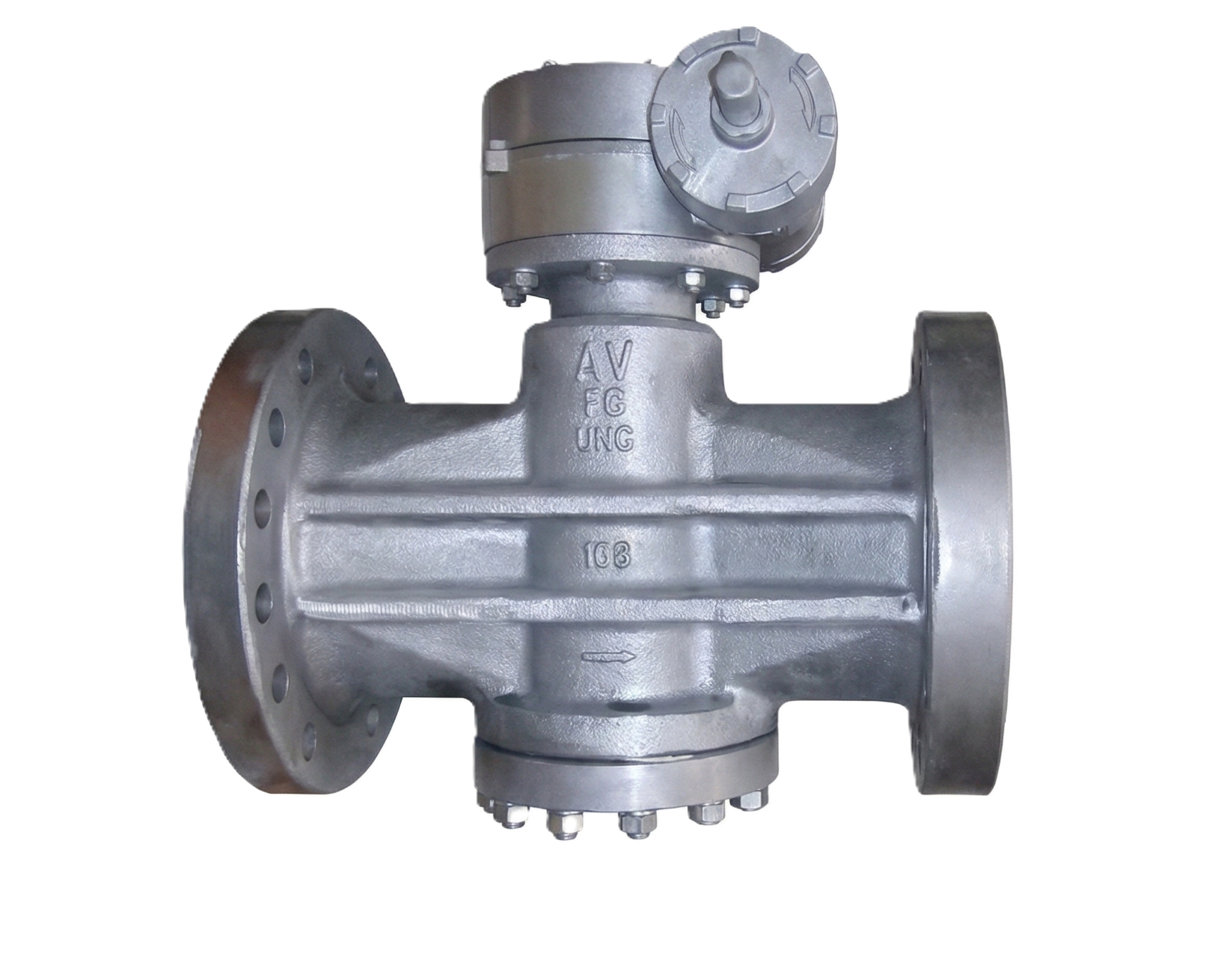
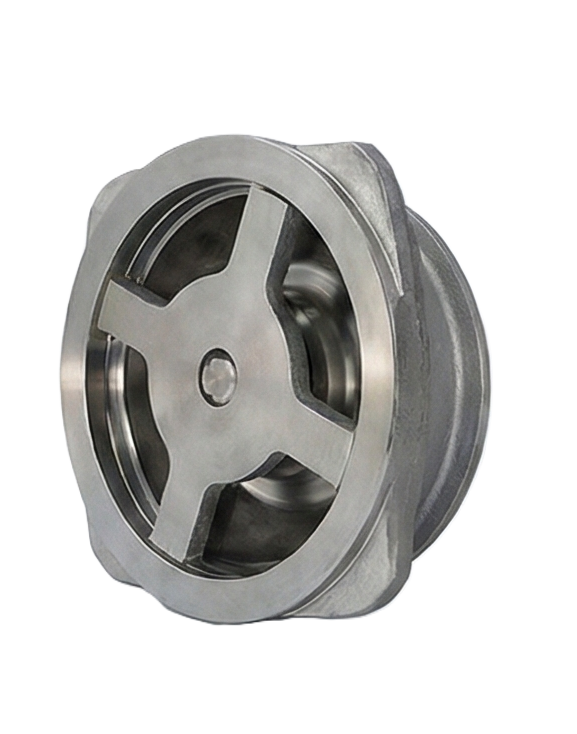
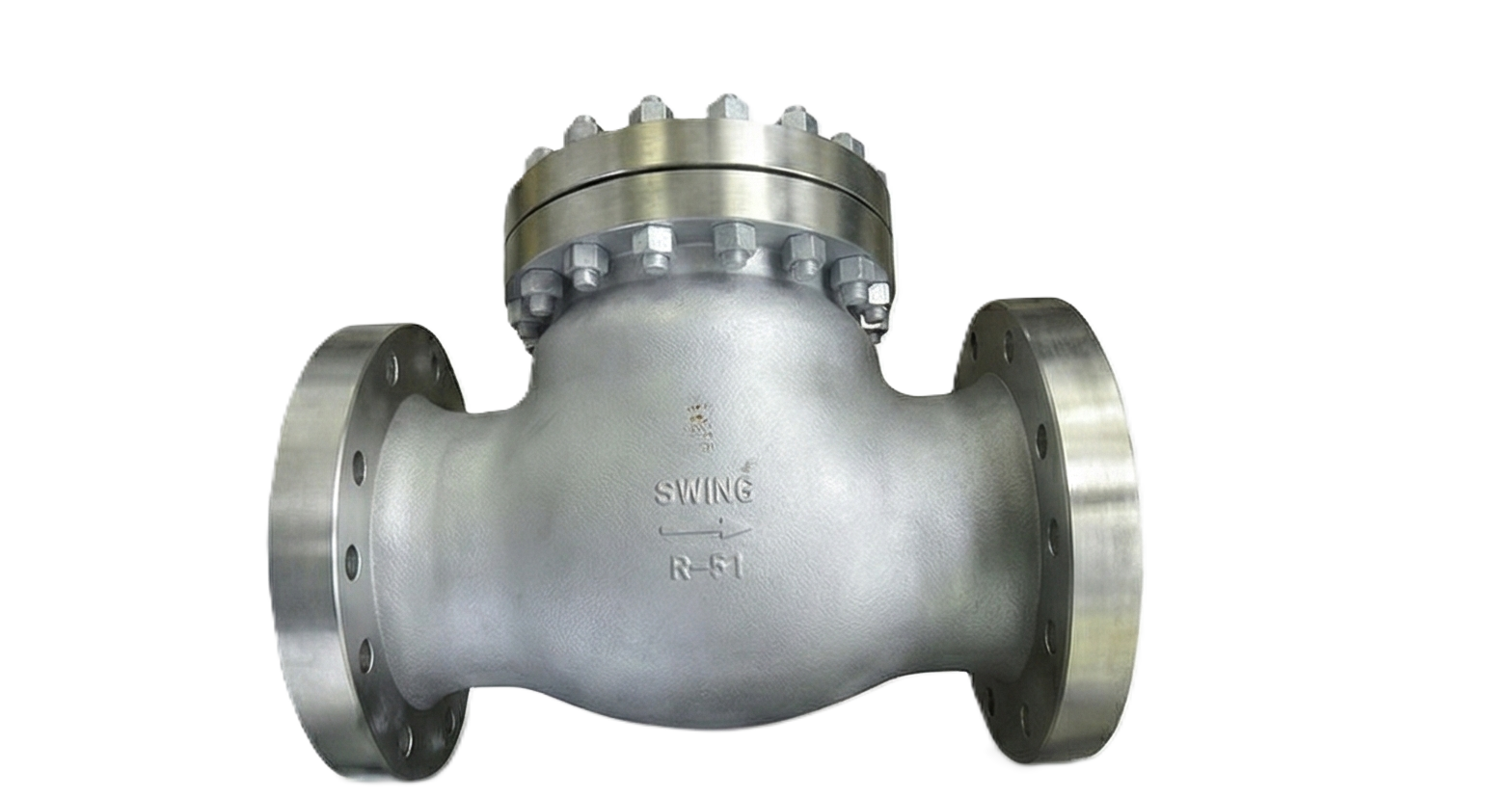
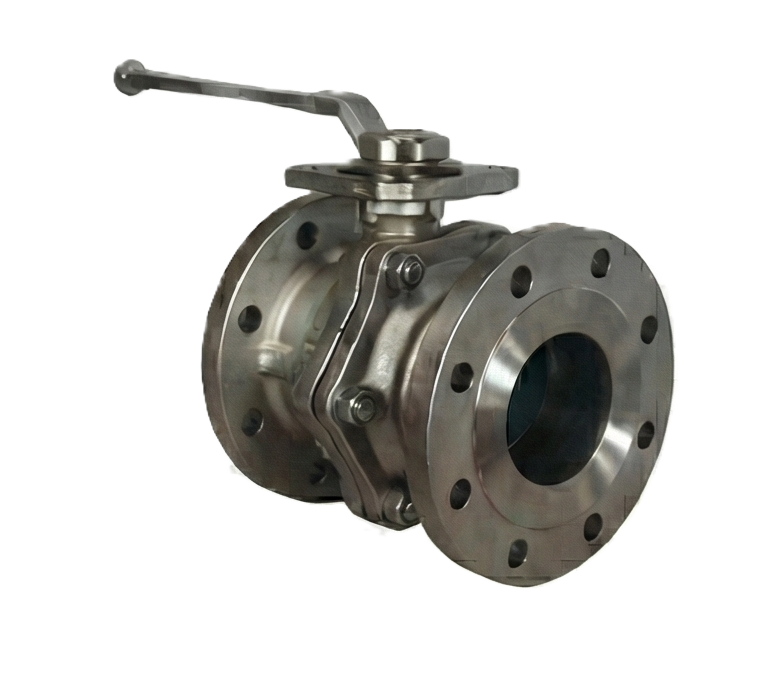
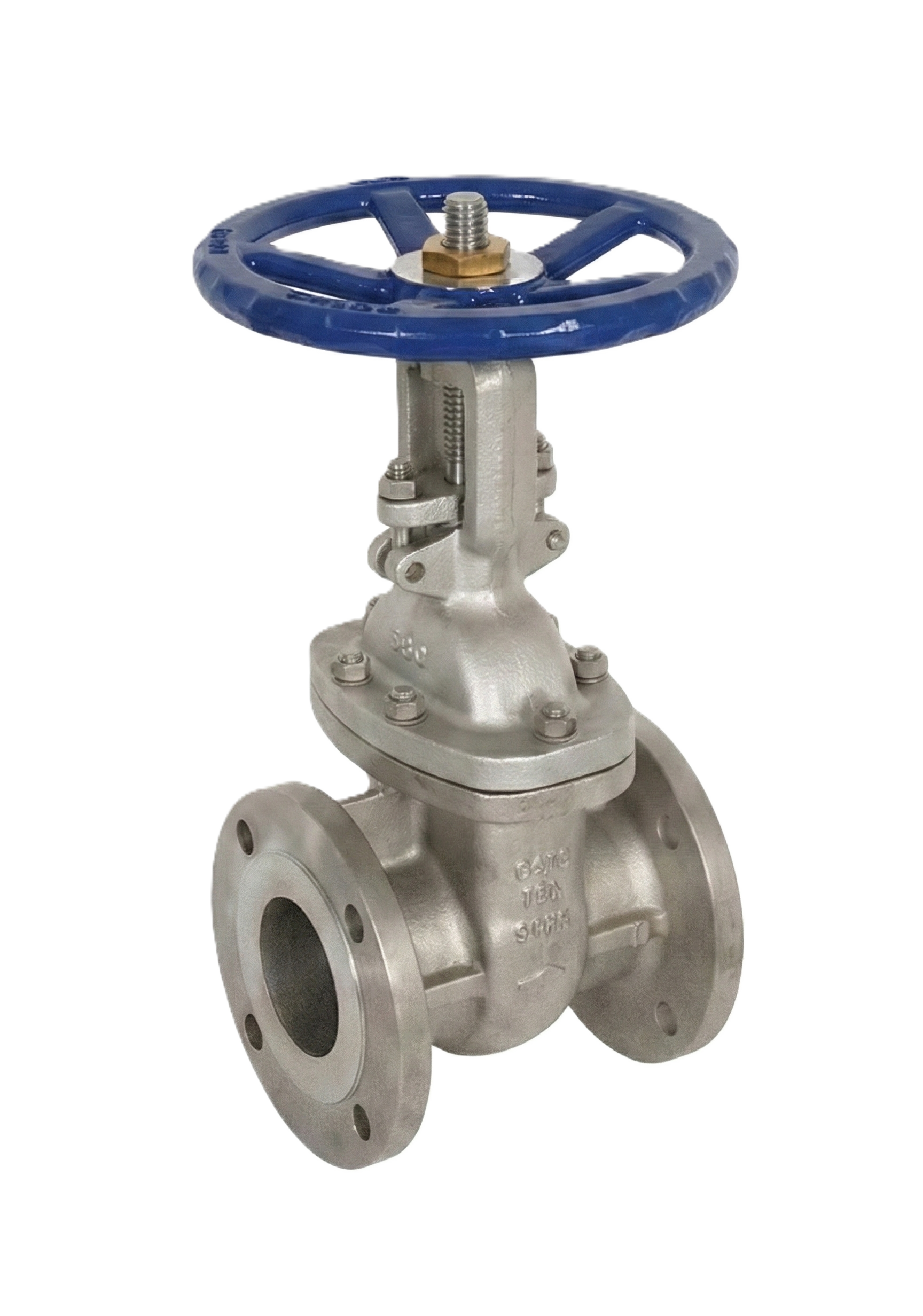
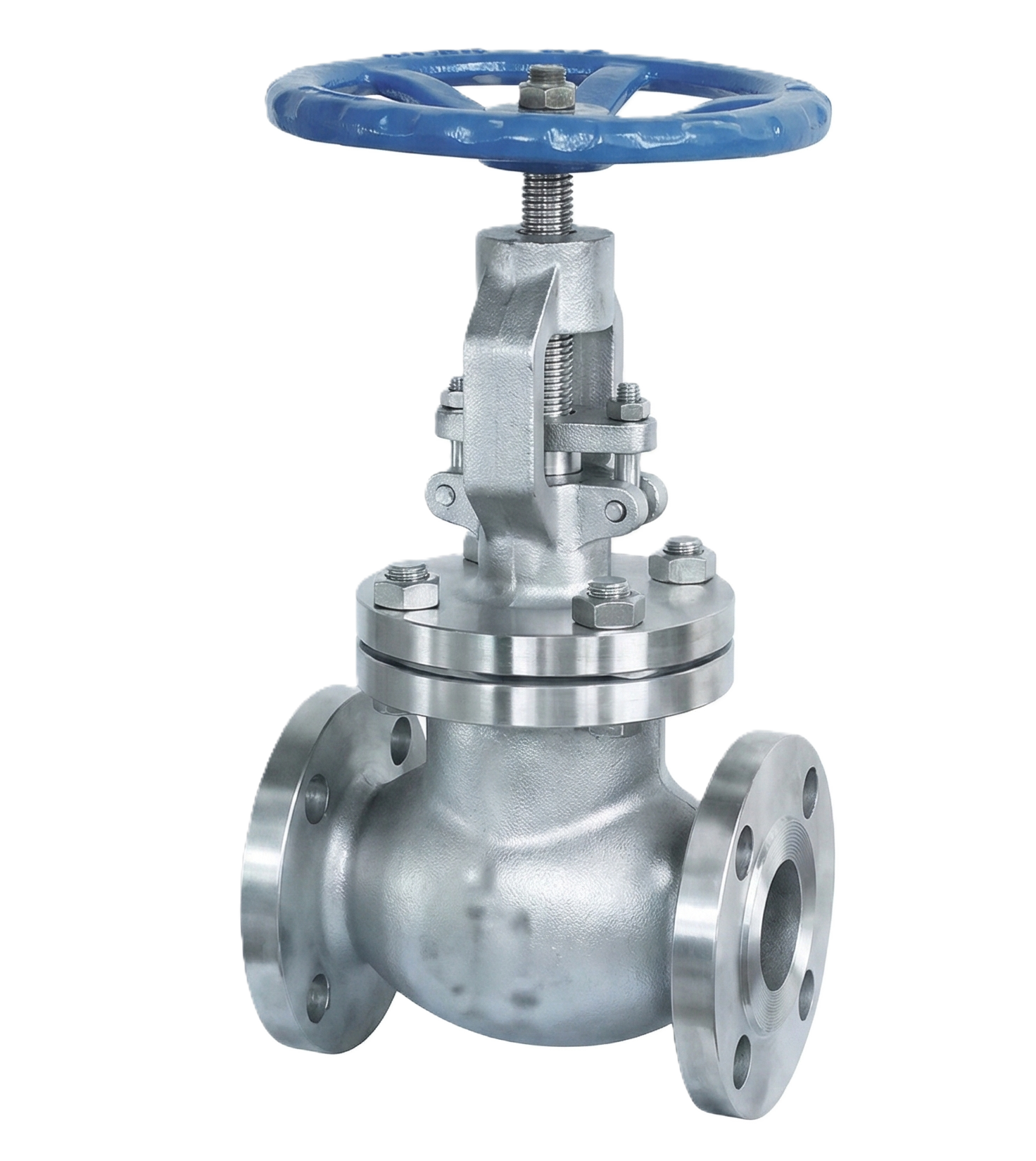
The Swing Check Valve is a self-acting safety valve designed to prevent backflow in piping systems. It features a movable disc (the "swing") that hangs from a hinge pin. When fluid flows in the forward direction, the pressure pushes the disc open, allowing for a full, unobstructed flow. If the flow stops or reverses, gravity and the weight of the reverse pressure "swing" the disc back onto the seat, creating a tight seal.
Available in ANSI Class 150 for standard industrial pressure and ANSI Class 300 for higher-pressure environments, these valves are essential for protecting pumps and compressors from damage caused by reverse flow.
Key Features:-
- Full-Port Design: The disc swings entirely out of the flow path when fully open, resulting in extremely low pressure drop and high flow capacity.
- Self-Operating: Requires no external power or manual intervention; the valve responds purely to the pressure and direction of the media.
- Renewable Seats: Most models feature replaceable or re-grindable seat rings, significantly extending the service life of the valve body.
- Heavy-Duty Construction: Built to ASME B16.34 standards with wall thicknesses designed to handle the rigors of Class 150 and 300 service.
Technical Specifications:-
| Feature |
ANSI Class 150 |
ANSI Class 300 |
| Max Pressure (Cold) |
~285 PSI (20 Bar) |
~740 PSI (51 Bar) |
| Body Materials |
WCB (Cast Steel), LCB, CF8M (316 SS) |
WCB, CF8M, Alloy Steel |
| Face-to-Face |
ASME B16.10 Standard |
ASME B16.10 Standard |
| End Connection |
Raised Face (RF) Flanged |
Raised Face (RF) or RTJ |
| Hinge Pin |
Internal or External (Bolted Cover) |
External with Plug or Bolted Cover |
Applications:-
Swing check valves are the "silent protectors" in various fluid systems:
- Pumping Stations: Installed on the discharge side of pumps to prevent water hammer and reverse rotation when the pump shuts off.
- Oil & Gas: Used in refineries and transmission lines to ensure unidirectional flow of crude and refined products.
- Steam & Condensate: Ideal for horizontal steam lines to prevent condensate backflow.
- Chemical Processing: Utilized in stainless steel configurations for handling corrosive fluids and acids.