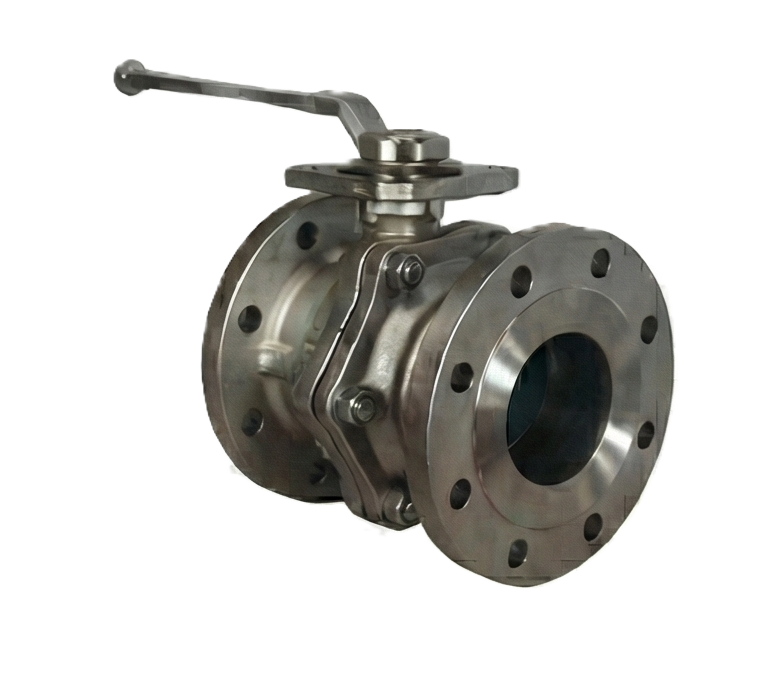
The Three-Way Ball Valve is a versatile multi-port flow control solution designed to streamline piping systems by replacing multiple two-way valves. By utilizing a single valve body with three ports, this valve can divert, mix, or block flow with a simple 90-degree or 180-degree turn. It is the industry standard for applications requiring complex fluid routing, bypass loops, and automated distribution.
Available in both L-Port and T-Port configurations, these valves are engineered for maximum hydraulic efficiency and bubble-tight shut-off in chemical, water treatment, and industrial process lines.
L-Port vs. T-Port: Choosing Your Flow Pattern:-
Understanding the internal ball drilling is critical for selecting the right 3-way valve for your application:
- L-Port (Diverter Valve): Used to direct flow from one common inlet to one of two different outlets. It is ideal for switching between two tanks or bypassing a piece of equipment. It cannot connect all three ports at once.
- T-Port (Mixing & Multi-Directional): The most versatile configuration. It can mix two different fluid sources, divert flow to two outlets simultaneously, or allow straight-through flow while closing the third port.
Key Features & Benefits:-
- Piping Simplification: One 3-way valve eliminates the need for two or three standard shut-off valves and the associated "T" junctions, reducing leak points and installation costs.
- Zero-Leakage Performance: Equipped with high-quality PTFE or RPTFE seats on all ports to ensure no cross-contamination between flow paths.
- Full Bore (Full Port) Option: Designed to maintain the same internal diameter as your piping, ensuring minimal pressure drop and high flow capacity.
- ISO 5211 Mounting Pad: Standardized top flange allows for easy automation with Pneumatic or Electric Actuators for remote flow diversion.
- Blow-out Proof Stem: Internally loaded stem design ensures safety by preventing stem ejection under high-pressure conditions.
Technical Specifications:-
| Feature |
Specifications |
| Size Range |
1/2" to 12" (DN15 – DN300) |
| Body Materials |
Stainless Steel (CF8M/CF8), Cast Steel (WCB), Brass, PVC |
| Pressure Ratings |
1000 PSI (WOG), ANSI Class 150 / 300, PN16 / 40 |
| Seat Materials |
PTFE (Teflon), Reinforced PTFE, PEEK, or Metal-to-Metal |
| End Connections |
Screwed (NPT/BSP), Flanged (ANSI/DIN), Socket Weld |
| Operation |
Manual Lever, Gearbox, Pneumatic, or Electric Actuation |
Target Industrial Applications:-
Three-way ball valves are essential components in automated and manual fluid routing:
- Chemical Processing: Diverting aggressive chemicals between different processing stages or mixing reagents.
- HVAC Systems: Controlling flow between primary and secondary heating/cooling loops and heat exchangers.
- Water Treatment: Automated switching between filtration banks and backwash cycles.
- Oil & Gas: Directing fuel or oil from a main header to multiple storage tanks or bypass lines.
- Food & Beverage: Routing ingredients to different mixing vats or managing CIP (Clean-in-Place) fluid flow.
Why Choose a Multi-Port Solution?
Investing in a Three-Way Ball Valve significantly improves system reliability by reducing the number of potential failure points (joints and seals). Whether you need a manual diverter for a small workshop or a fully automated T-port valve for a chemical plant, these valves offer a compact, efficient, and cost-effective way to manage complex flow requirements.